Showing posts with label oppression. Show all posts

Monday, March 25, 2013

Prodigy Book Review

Author: Marie Lu. Release date: 2013. Publisher: Putnam Juvenile. ISBN: 9780399256769.

Annotation: After escaping execution, Day and June are on the run from the Republic. They soon find themselves seeking refuge among the Patriots, an anti-Republic group lead by a man named Razor. In order to keep them safe and help them free Day’s brother Eden, the Patriots make June and Day an offer:  help them assassinate the Elector.

Personal thoughts: I enjoyed Legend quite a bit, but after now after reading Prodigy I can safely say that I have morphed into a huge fan of Marie Lu’s series. I really like the world she has created, especially since we got to learn more about it in this novel. I found myself liking Day and June a lot more than I did in Legend, particularly June who is given the opportunity to come out of her “Republic soldier genius” shell in Prodigy. I would easily recommend this trilogy to fans of dystopian novels, especially readers who are pining for something Hunger Games-y. I am really looking forward to the third novel!

Plot summary: After narrowly escaping execution, Day and June are on the run from the Republic. Not sure where to turn for safety, they soon find themselves at the mercy of the Patriots: an anti-Republic group lead by a man named Razor. The Patriots want to unite the Republic and the Colonies and bring about the return of the United States of America, and offer to help Day and June in exchange for their assistance in bringing about a revolution. After the Elector Primo dies and his son, Anden, takes over as leader of the Republic, the Patriots see their chance to create an uprising. In order to do so, they will assassinate the new Elector; more specifically, Day will pull the trigger. Day and June reluctantly agree to the Patriots’ plan, having nowhere else to turn and desperately wanting the help of the Patriots in rescuing Day’s brother Eden from the clutches of the Republic. But can Day and June truly trust Razor and the rest of the Patriots, or is there something, or someone, else behind the plot to assassinate the new Elector?

Review: Following up 2012’s best-selling and hugely popular Legend was, undoubtedly, a daunting task for author Marie Lu. Fortunately, the sequel, Prodigy, not only lives up to but surpasses its predecessor, bringing the Legend trilogy safely to the forefront of the young adult genre. Where Legend spent a great deal of time setting the stage for the story (i.e. firmly establishing the totalitarian brutality of the Republic, building the romance between Day and June, etc), Prodigy gets to use this plot construction as a springboard into a very exciting series of twists and turns. Full of action from start to finish, most readers will have trouble putting the book down. Day and June are further developed, as are some additional characters, making the reader a lot more invested in the story than they might have been in Legend. In addition, a lot of information is revealed, propelling the world Marie Lu has created into very intriguing new areas. Overall, a stellar sequel that is sure to please already existing fans and draw in new readers as well. The third and final novel in the trilogy, Champion, is set to be released in 2014.

Genre:  Science-Fiction

Reading level: Grade 7+

Similar titles: The Hunger Games trilogy by Suzanne Collins, Divergent series by Veronica Roth, The Pledge series by Kimberly Derting, Shatter Me series by Tahereh Mafi, Under the Never Sky series by Veronica Rossi, Across the Universe trilogy by Beth Revis, Cinder series by Marissa Meyer.  

Themes:  Dystopian, oppression, government control, loyalty, conspiracy, assassination, trust, love.

Awards/Reviews:  Starred review from Publishers Weekly and Shelf Awareness. Positive reviews from New York Journal of Books, Entertainment Weekly and Los Angeles Times.  

Series Information: Second installment in Legend trilogy. First novel, Legend, released in 2011. Third novel, Champion, set to be released in 2014.   

Discussion questions:

-        Which novel did you like more: Legend or Prodigy? Why?

-      Explain the title of the novel. What is a prodigy? Who is the title referring to?

-          Who would you describe as the protagonists and antagonists in the novel? Do they change as the story progresses?
-        What does the paper clip ring symbolize?

-        If you were Day or June, would you have agreed to be a part of the Patriots' plan? Why or why not?

-         Why does the relationship between Tess and Day become strained? Do you think that’s normal?

-         Who is your favorite character in the novel? Why?

-         What would you like to see happen in the third novel, Champion?


Thursday, August 30, 2012

Article 5 Book Review

 Author: Kristen Simmons. Release date: 2012. Publisher:  Tor Teen. ISBN: 9780765329585.

Annotation: In the not-too-distant future, the United States is governed by the Moral Statutes: laws created following a catastrophic world war. One of the newest laws is Article 5 which states that only children conceived by a married man and woman are valid citizens. Seventeen-year-old Ember Miller has always tried to abide by the Moral Statutes, but after Article 5 is enacted, she and her single mother can no longer hide.      
Personal thoughts: I am really a big fan of dystopian novels, but it seems like after you’ve read 20+ titles in the genre, the ones that don’t do something completely different kind of blend together. I enjoyed reading Article 5, but I’m worried that it might not be unusual enough to really stick out in the crowd. I kind of already knew what was going to happen when the story began, just because it is what usually happens in dystopian novels. I do think it is a good book, however, and would easily recommend it to someone who wanted a Hunger Games read-alike. I will also definitely be picking up the sequel when it’s released, and I hope that the author can take the story in a unique direction that will really make the series a standout.
Plot summary: After a brutal war destroyed most of the United States’ major cities, the country is now under control by the Federal Bureau of Reformation (FBR). The Moral Statutes govern what citizens can and cannot do, and compliance is mandatory. The newest of the Moral Statutes is Article 5, which states that only children conceived by a married man and woman are valid citizens. Seventeen-year-old Ember Miller has tried to live her life in compliance with the Statutes. She attends high school, behaves appropriately, and tries to discourage her free-spirit mother from acting immorally. After the FBR initiates a crackdown on Article 5 violators, however, Ember and her mother, who has never been married, find themselves under arrest. Ember is sent to a reform school for girls, and her mother is sent to prison to await trial. The reform school is operated by a cruel woman named Ms. Brock and guarded by dozens of FBR soldiers. Ember wants nothing more than to escape the school and rescue her mother, but she cannot forget the face of one of the men who arrested her: Chase Jennings, the only boy she has ever loved.
Review: From debut author Kristen Simmons comes Article 5, the first novel in a new dystopian series for teens. Dystopian novels seem to be the bread and butter of the young adult genre in recent years, and, although it is well-written and has originality, Article 5 does have a lot in common with other recently published dystopian novels. The government rules with an absolute iron fist, people who disobey aren’t heard from again, the main character finds herself thrust into a situation that causes her to be at odds with the government, there is a romance that is threatened by the aforementioned situation. These are all plot points that Article 5 shares with other novels in the genre (in fact, Katniss Everdeen, the Godmother of dystopia herself, has these in common with Kristen Simmons’ Ember Miller.) The fact that Article 5 is a lot like other recently published dystopian novels, however, doesn’t make it any less entertaining. The author does a great job of creating tension in the story: the reader is never sure who to trust, what the truth about various situations is, and what will happen next for Ember Miller and Chase Jennings. There are also several plot twists that keep the book flowing very smoothly from start to finish, leaving the reader at a satisfying point to anticipate the sequel. Ember is a very likable if slightly underdeveloped character (the reader doesn’t really get a sense for who she is prior to the events of the story because the action starts within the first pages of the novel.) Hopefully, the author will be able to expand on Ember, Chase and their relationship in the sequel, Breaking Point, which is set to be released on February 5, 2013.
Genre:  Science-Fiction
Reading level: Grade 8+
Similar titles: Hunger Games series by Suzanne Collins, Awaken by Katie Kacvinsky, Cinder by Marissa Meyer, Divergent series by Veronica Roth, Eve by Anna Carey, The Pledge by Kimberly Derting, The Selection by Kiera Cass, Starters by Lissa Price, Partials by Dan Wells, Legend by Marie Lu, Under the Never Sky by Veronica Rossi, What Happened to Serenity? by PJ Sarah Collins.
Themes:  Dystopian, post-apocalyptic, oppression, romance, duty, mother/daughter relationships.
Awards/Reviews:  Positive reviews from School Library Journal and Huffington Post.
Series Information: Sequel, Breaking Point, set to be released February 5, 2013.  
Discussion questions:
-        What do you think of the Moral Statutes? Do you think it’s possible that something like the Statutes could ever be enacted in the United States? Why or why not?

-      What would you have done if you were taken to reform school? Would you have acted like Rebecca? Rosa? Ember? Why?

-       What do you think was the reasoning behind Chase’s actions throughout the novel? Was it love? Loyalty? Duty?

-       Why do you think Tucker had such a grudge against Chase?

-    What would you like to see happen in the sequel to Article 5?


Wednesday, April 11, 2012

Partials Book Review

 Author: Dan Wells. Release date: 2012. Publisher:  Balzer + Bray. ISBN: 9780062071040.

Annotation: In the year 2076, the world has been decimated after the Partials, genetically engineered super soldiers, rebelled against their human creators with a deadly virus known as RM. Now the human race is on the verge of extinction as every newborn in the survivor settlement of East Meadow on Long Island succumbs to the virus. Sixteen-year-old medic Kira Walker is determined to find a cure for the virus, even if it means capturing and studying a Partial to do it.
Personal thoughts: I was a bit worried that this novel would be irritatingly similar to other dystopian books I’ve read recently when I heard what it was about, but was pleasantly surprised that this was not the case. Although I definitely recognized some concepts from other popular books, TV shows or movies, the overlap didn’t bother me. In fact, I found the author’s take to be fresh and interesting. One of my favorite parts of the novel was the presence of strong, intelligent female protagonist, Kira. Not only is she described as beautiful, she is also very smart, explaining the science of her research to the reader and giving teen girl’s a positive role model who is proud of her knowledge and uses it for a purpose she believes in. I’m looking forward to seeing how Kira develops in the following installments, and can’t wait to read Fragments when it’s released in 2013.

Plot summary: The year is 2076, and the world has been decimated after the Partials, genetically engineered super soldiers, rebelled against their human creators. Having replaced the world’s armies, humans were unable to defend themselves when the Partials launched their attacks. It was a biological weapon, a deadly virus known as RM, that managed to wipe out 99.9% of the world’s human population. The Partials retreated after the RM plague and haven’t been seen for eleven years, but now the human race is on the verge of extinction as every newborn in the survivor settlement of East Meadow on Long Island succumbs to the virus. The survivors themselves are inexplicably immune to RM, but the inability to produce new generations threatens to put the final nail in the coffin that was humanity. In response to this overwhelming problem, the government of East Meadow created the Hope Act: a law that requires all women age 18 and over to be pregnant at all times. Sixteen-year-old Kira Walker was only five when RM was released, but she still remembers a time before every infant died within hours of birth. Kira works as a medic in East Meadow hospital’s maternity unit. Everyday she helps her fellow scientists try to discover a cure for RM by studying the newborns before they quickly die. When her best friend Madison becomes pregnant, however, Kira is determined that her baby will live. Convinced that the answer to curing RM lies in the physiology of the Partials, all of whom are immune to the virus, Kira sets out for the deserted island of Manhattan with one mission: to bring a live Partial back to East Meadow and find a cure.
Review: Continuing the dystopian craze that seems to have taken over young adult literature is Dan Wells’ Partials, the exciting and well-written first installment in a new post-apocalyptic series for teens. A cross between Lauren DeStefano’s Chemical Garden trilogy, Battlestar Galactica and Terminator, some common ideas (i.e. the revolting robot/machine, world-ending plague, totalitarian government, etc.) get a fresh and interesting take in this novel. From the beginning, it is clear that the Partials, the human race’s enemy number one, are going to have a role in curing the deadly RM virus. Unraveling exactly what that role will be is one of the most intriguing parts of the story. The author does an excellent job of creating an action packed plot, making Partials an ideal recommendation for male readers who want something exciting. Teen girls will also find a lot to identify with in Kira, the smart and dedicated scientist who is determined to save the life of her best friend’s unborn baby. Unlike other dystopian novels, and young adult novels in general, the romantic part of the novel takes a bit of a backseat to the rest of the story. Readers might pick up on a potential future love triangle, but the book isn’t particularly lovey-dovey, adding to its male appeal. Overall, Partials is an enjoyable and interesting beginning to a series with lots of potential. The sequel, Fragments, is set to be released in 2013.

Genre: Science-fiction
Reading level: Grade 7+

Similar titles: Eve by Anna Carey, The Pledge by Kimberly Derting, The Chemical Garden trilogy by Lauren DeStefano, The Eleventh Plague by Jeff Hirsch, Legend by Marie Lu, Cinder by Marissa Meyer, Divergent by Veronica Roth.    
Themes:  Dystopian, post-apocalyptic, plague, genetic engineering, survival, pregnancy, oppression, rebellion.

Awards/Reviews:  Positive reviews from Kirkus, Publisher’s Weekly, VOYA, The Wall Street Journal, and The Los Angeles Times.
Series Information: First installment in Partials series. Second novel, Fragments, set to be released in 2013.  

Discussion questions:
-      Why do you think the Partials rebelled against their human creators? Do you think they were justified?

-      Do you think the Hope Act was right or wrong? Why?

-       Do you think the way Samm was treated was humane? Why or why not?

-     Why do you think the Senate chose Kira to study Samm?

-       What do you think the last line of the novel means?


Saturday, March 24, 2012

Eve Book Review

 Author: Anna Carey. Release date: 2011. Publisher:  HarperCollins. ISBN: 9780062048503.

Annotation: In the year 2032, sixteen-year-old Eve is preparing for graduation from School, a place she has been living with other girls her age since a deadly plagued wiped out most of the world’s population years earlier. When Eve finds out the truth about her future holds post-graduation, however, she escapes and ventures into the wild trying to survive in a world full of broken down buildings, vicious packs of wild animals, and savage gangs of brutal men.  

Personal thoughts: Although I did enjoy this book, I couldn’t help but think for most of it, “Wow, this reminds of me ‘insert name of other novel.’” There was so much overlap for me with other young adult dystopian literature that I couldn’t really get into the story. I do realize that it is common for many YA novels to have similar concepts, themes, etc., and for that reason I think that the Eve series can be easily enjoyed by many readers who are really into the genre. It would make an ideal read-alike for fans of Hunger Games or Divergent especially. Even though I was not the hugest fan, I do plan to pick up the sequel when it’s released in July. I want to see what direction the series takes.  

Plot summary: The year is 2032, and most of the world’s population has been wiped out by a deadly plague sixteen years earlier. To try and reestablish order, the King of New America has formed Schools: places for young orphaned girls to live and become educated, hoping one day to work in a trade in the City of Sand. Sixteen-year-old Eve has been a student in such a school for ten years since her mother succumbed to the plague. Intelligent and disciplined, Eve is her class’ valedictorian, charged with the honor of leading her friends “across the bridge” to their new residence where they will learn their trade. The night before graduation, however, Eve learns the terrible truth about what happens to the graduates once they cross the bridge: they are turned into broodmares, impregnated over and over again to anonymously repopulate New America. Eve is horrified and escapes the walls of the School to try and reach Califia, a place that is said to be free and beyond the reach of the King. Pursued by government troops and struggling to survive in the wild, Eve encounters Arden, another runaway student from her School, and the pair, though former rivals, agree to travel to Califia together. Having been taught from an early age to fear all men except the King, Eve and Arden are terrified when they encounter Caleb, the first boy of their own age they have ever seen, who saves them one night from a vicious bear attack. As Eve gets to know Caleb, she finds herself experiencing something they didn’t teach her about in School: love. Will Eve’s newfound feelings get in the way of her making it safely to Califia?

Review:  Dystopian literature seems to be getting an increasingly sturdy foothold in young adult literature, and the addition of Anna Carey’s new series Eve further cements the genre as a literary powerhouse. The concepts in the novel have some degree of overlap with most other dystopian stories available: a plague has wiped out the globe leaving North America a barren wasteland. A rigid society has formed to help keep order in an otherwise chaotic world. A beautiful and intelligent girl finds herself meeting a handsome ruffian in the wilderness who teaches her how to survive. Unfortunately for Eve, there is very little new material in the plot. The one concept that is perhaps the most interesting and stands out in the novel is the idea of the girls being taught that men are not to be trusted. This was an intriguing thought, and one that was explored later in the romance between Eve and Caleb. The novel also makes mention of many classic works of literature that most teen readers will be able to understand and appreciate. Overall, Eve is entertaining, but there are many other series available that capture the excitement of the dystopian genre more successfully. The second novel in the series, Once, is set to be released July 3, 2012.

Genre: Science-Fiction

Reading level: Grade 7+

Similar titles: The Chemical Garden trilogy by Lauren DeStefano, Dearly, Departed by Lia Habel, The Eleventh Plague by Jeff Hirsch, Awaken by Katie Kacvinsky, Legend by Marie Lu, Shatter Me by Tahereh Mafi, Dark Inside by Jeyn Roberts, Under the Never Sky by Veronica Rossi.  

Themes:  Dystopian, plague, post-apocalyptic, oppression, love.   

Awards/Reviews:  Positive review from Lauren Kate, author of Fallen.

Series Information: First installment in Eve series. Second novel, Once, set to be released July 3, 2012.   

Discussion questions:

-     Why do you think the students at Eve’s school were taught to fear men?

-     If you were Eve, would you have left School after finding out the truth? Why or why not?

-     Why do you think Eve and Arden didn’t get along? What changed their relationship?

-    Do you think Leif is a protagonist or antagonist? Why?

-        Why do you think the King wanted Eve so much?

-       Were you happy with Eve’s choice at the end of the novel? Why or why not?

Sunday, February 5, 2012

Legend Book Review

Author: Marie Lu. Release date: 2011. Publisher:  Putnam Juvenile. ISBN: 9780399256752.
Annotation: The year is 2130 and, after the collapse of the United States, the western half of America, a Republic, is embroiled in a civil war with the Colonies to the east. Fifteen-year-old June Iparis, the Republic’s most promising up-and-coming soldier, vows to avenge her older brother who was killed by a notorious criminal known only as Day. June is unprepared, however, when she discovers that Day is, like her, only fifteen and her brother’s death might not have been his fault after all.
Personal thoughts: I always like a good dystopian novel and so I really enjoyed Legend because it is just that: a good dystopian novel. This genre seems to be more and more popular in young adult literature, but Marie Lu added a lot of elements to her story to make it fresh and unique. I was really intrigued with the Trials concept and hope she goes into that a little further in the sequel. I also am curious to learn more about the conflict between the Republic and the Colonies, and think that it will have a more important role in the sequel as well. Overall, I want to know more about the world Marie Lu has created and am looking forward to the sequel. I would highly recommend Legend for teens (or adults!) who are Hunger Games fans especially!
Plot summary: Following the collapse of the United States, the western half of the continent has become the Republic of America: an oppressive society ruled with an iron-fist by an elector and his massive army of soldiers. All children in the Republic are subjected to the Trial at age ten: an aptitude test that determines their place in society. Fifteen-year-old June Iparis has accomplished what no other person in the Republic has, a perfect score of 1500 on her Trial. This puts her in a top position with the Republic’s army, and she trains constantly with her older brother, Metias, hoping to eventually become a commanding officer. On the other side of the spectrum is Day, a fifteen-year-old from one of the poorest sectors of the Republic who failed his Trial. Those children who fail are sent to labor camps, but Day, who managed to escape after receiving his score, has been living on the streets, trying to protect his family from the oppressive police forces and plague patrols that dominate the poor districts. Now Day is the most-wanted criminal in the Republic and has been accused of the murder of June’s brother. Enraged and determined to avenge Metias’ death, June goes undercover to discover who Day is and bring him to justice. The more June learns, however, the more she begins to understand that the Republic, not Day, might be the true enemy.
Review:  Debut author Marie Lu describes the first novel in her new series as a more modern take on the classic Les Misérables tale, exploring the relationship between criminal and investigator. Add a gritty, futuristic setting rife with oppression, civil war, and conspiracy, a touch of romance, and two attractive teen protagonists and you have Legend, a dystopian novel that will appeal to fans of the genre as well as those who are simply interested in a well-written and entertaining story. In the wake of the Hunger Games mania, teen readers are often looking for something that is different enough from Suzanne Collins’ trilogy to be intriguing but similar enough to have the same appeal. Marie Lu’s new series fits nicely into that category. The setting is well-thought out and developed, as are the various pieces of the Republic of America: the class warfare, the segregation, the plague and disease, the brutality of the government, etc. The main characters, June and Day, share in narrating the novel, providing the perspectives of the haves and the have-nots and allowing for the reader to identify with and care about both equally. The book concludes at a satisfying point that still leaves plenty of room for a sequel to continue story. Overall, an easy-to-read, well-paced and enjoyable novel that fans of dystopia, especially The Hunger Games, will want to read. The not-yet titled sequel is set to be released in late 2012.
Genre: Science-Fiction
Reading level: Grade 7+
Similar titles: The Hunger Games trilogy by Suzanne Collins, Divergent by Veronica Roth, The Pledge by Kimberly Derting, Shatter Me by Tahereh Mafi, Matched by Ally Condie.
Themes:  Dystopian, oppression, terrorism, loyalty, post-apocalyptic, disease, conspiracy.
Awards/Reviews:  Starred reviews from Kirkus, Publishers Weekly, VOYA and Library Media Connections. Positive reviews from New York Times, Los Angeles Times, USA Today.   
Series Information: First installment in Legend series. Second novel set to be released in 2012.
Discussion questions: 
-    What do you think is the purpose of the Trials?
-     Why was Day trying to stop the Republic’s efforts on the Warfront?
-    Which character did you like better: Day or June? Why?
-   Do you think June did the right thing? Why or why not? What would you have done?
-      What would you like to see happen in the sequel?

Wednesday, January 25, 2012

The Pledge Book Review

 Author: Kimberly Derting. Release date: 2011. Publisher:  Margaret K. McElderry Books. ISBN: 1442422017
Annotation: In the country of Ludania, citizens are divided into classes separated by language, each forbidden to speak to each other in anything but the common language, Englaise. Seveteen-year-old Charlaina “Charlie” Hart has always been able to understand all the languages, something she has had to keep hidden. After she unwittingly becomes involved in the rebellion against Queen Sabara, however, her secret might be the key to ending the cruel oppression of the people of Ludania.
Personal thoughts: I had heard many good things about The Pledge, and, after reading it in the span of a few hours, I now understand the hype! I was surprised by how engrossing the novel was, especially because it wasn’t particularly lengthy. I think the author really knows what she’s doing, and managed to create something thoroughly interesting but also succinct enough to be entertaining for even the most reluctant teen readers. I also think that the concepts in the novel make for a great jumping off point for a classroom discussion about class warfare or oppression in our current society. Overall, a very thought-provoking read that is difficult to put down. I’m really looking forward to continuing this series when the next installment in published!
Plot summary: In the distant future, the world is divided into countries that tenuously coexist. Each is ruled by a queen who oversees their country with an iron fist. The country of Ludania is home to seventeen-year-old Charlaina “Charlie” Hart and is governed by the fearsome Queen Sabara. For centuries, Ludania’s citizens have been divided into four classes: the Counsel class, the Vendor class, the Serving class, and the outcasts. Classes are differentiated by the language they speak, each class having its own language that the other classes are unable to understand. Englaise, the universal language, is the only way for members of different classes to communicate lawfully: if someone from a higher class is speaking in their native tongue, members of the lower classes are forbidden to even make eye contact until they are spoken to in Englaise. For Charlie, life as a member of the Vendor class is fairly mundane: she attends school every day with her best friends Brooklynn and Aron, works in her parents’ restaurant, and helps take care of her little sister, Angelina. But Charlie has a dangerous secret that she’s been keeping since she was a child: she has the ability to understand every language spoken in Ludania. If her ability was discovered by the authorities, she would be executed and her whole family would be put in danger. One night, at one of the underground clubs that Charlie and Brooklynn like to frequent, Charlie meets Max: a handsome and mysterious soldier who speaks a language Charlie has never heard before, but seems to understand. Charlie’s confusion is furthered when Max seems to know her and understand her ability. In the meantime, the threat of revolution in Ludania grows, and Charlie begins to realize that she might hold the key to the future of her country.
Review:  From the author of The Body Finder, comes this first installment in a new series for young adults that takes the always popular dystopian concept and mixes it with magic for a story that is certain to intrigue and entertain readers. The Pledge is set in the very distant future, and civilization as we know it has been replaced by a Bradbury-esque collection of countries ruled with an iron-fist by ruthless queens. The author does an excellent job of creating the world of Ludania, taking care to make sure that the history of the kingdom is clear as are the rules of language that govern its citizens. In Charlie’s school, typical situations like being made fun of by the wealthy and popular girls can turn deadly since the lower classes are not only forbidden to communicate with their higher-ups, but are not supposed to even comprehend the language they speak. Derting creates many tense situations where Charlie’s ability to understand all the languages in her kingdom puts her in mortal danger. This makes for a very suspenseful novel, and greatly adds to the reader’s enjoyment of the story. The secondary characters, such as Charlie’s friends Brooklynn and Aron, Max’s lackeys, Claude and Zafir, and the mysterious Xander, are as well developed as the plot, making for an overall engrossing book that is difficult to put down. The pacing of the story is excellent, particularly once the action really picks up in the second half of the novel. The second installment in The Pledge series, which has yet to be titled, is expected to be published in 2013.
Genre: Science-Fiction
Reading level: Grade 8+
Similar titles: Wither by Lauren DeStefano, Divergent by Veronica Roth.    
Themes:  Dystopian, class warfare, language, royalty, war, oppression, rebellion.  
Awards/Reviews:  Positive reviews from VOYA, Kirkus, Booklist and Publishers Weekly.
Series Information: First installment in The Pledge series. Second novel (not yet titled) to be published in 2013.
Discussion questions: 
-    Why do you think language was such an effective way to separate the classes in Ludania?
-    Do you think that language separates different groups from each other in our society? Why or why not? 
-     If you were Charlie, would you have helped Sydney? Why or why not?
-     Who was your favorite character in the book? Why?
-    What would you like to see happen in the second novel in this series?
-     Do you think that The Pledge would make a good movie? Why or why not?

Thursday, November 24, 2011

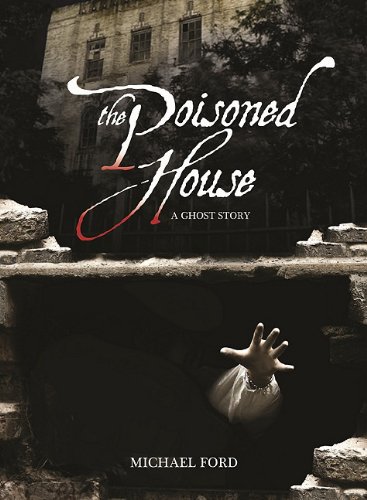
The Poisoned House Book Review

 Author: Michael Ford. Release date: 2011. Publisher:  Albert Whitman & Company. ISBN: 9780807565896.
Annotation:  Abi Tamper is a scullery maid in 1850s London who wants nothing more than to escape her life of hardship and abuse. When she suspects her ghost has started to haunt Greave Hall, however, Abi won’t stop until she uncovers the truth about her mother’s death a year earlier.
Personal thoughts:  I have to admit that the cover of this novel was really what drew me in to reading it. As a huge fan of both historical fiction and ghost stories, however, I was just as pleased with what I found in the pages. Ford did a wonderful job of crafting a very succinct but enjoyable novel with a well thought out plot and characters. I also enjoyed the story being from the perspective of the servants, which isn’t as often the case in young adult historical fiction novels. I look forward to seeing what else Ford comes up with.
Plot summary: Fourteen-year-old Abigail “Abi” Tamper wants nothing more than to escape the hardship she lives through every day as a scullery maid in 1850s London. Orphaned after her mother’s death a year earlier, Abi suffers constant abuse from Mrs. Cotton, Greave Hall’s housekeeper and sister-in-law to Lord Greave. Some of the small consolations in Abi’s life include Lizzy, her best friend and fellow scullery maid, Adam, the kind coal delivery boy, and Sammy, Lord Greave’s only son who has been like a brother to her for most of her life. Abi’s mundane existence is turned upside-down, however, when a ghostly presence begins to make itself known in the dark rooms of Greave Hall. Mysterious handprints, strange noises, and missing objects are just a few of the strange happenings that plague Abi and the rest of the staff. Abi is convinced that the ghost of her mother is haunting the mansion, trying to warn her that she is in danger. What secrets will Abi uncover as she tries to discover the truth about her mother’s death?
Review:  This fast-paced story makes for a quick read that manages to be enjoyable both as a historical fiction and horror novel. Despite its small size, The Poisoned House dives deeply into the hardships of life as a servant in 19th-century London, which is as important to the plot as the ghost story elements. Abi, an easily likable protagonist, is subjected to constant physical, mental and emotional abuse at the hands of Mrs. Cotton, the cruel and sadistic housekeeper. Mrs. Cotton’s antics are often difficult to read (from beating Abigail, to drowning kittens), but are, in all likelihood, an accurate portrayal of how the downtrodden would have taken advantage of any opportunity to demonstrate their power over the weak. The supernatural presence in Greaves Hall serves as a way for Abi to not only discover the truth about her mother’s death, but to escape the toil of her everyday life. The conclusion of the novel is quite satisfying as both an end to a creepy ghost story and to Abi’s constant abuse. Overall, The Poisoned House is as easily enjoyable for both teen and adult history buffs or horror fans.
Genre: Historical Fiction/Horror
Reading level: Grade 7+
Similar titles: Wrapped by Jennifer Bradbury.
Themes:  Ghosts, 19th century, London, servants, murder, oppression, abuse.  
Awards/Reviews:  Starred review from School Library Journal.
Series Information: N/A
Discussion questions:
- Do you think that Abi’s life as a scullery maid is an accurate depiction of what it was like to be a servant in 19th century England? Why or why not?
- Why do you think Mrs. Cotton was so cruel to Abi? What, in your opinion, was the worst thing she did to Abi?
- What do you think the significance was of each of the ghostly occurrences (i.e. the ripped scarf, the upturned room, etc.)?
- Were you happy with what happened at the end of the novel? Why or why not?