Showing posts with label Victorian era. Show all posts

Sunday, April 7, 2013

The Twisted Tragedy of Miss Natalie Stewart: A Novel of Magic Most Foul Book Review


Author: Leanna Renee Hieber. Release date: 2012. Publisher: Sourcebooks Fire. ISBN: 9781402262036.

Annotation: After freeing him from his prison inside a painting at the Metropolitan Museum of Art, Natalie and Lord Denbury are on the run, seeking refuge with one of Denbury’s longtime friends in Saint Paul. They soon discover, however, that their troubles are far from over, and the Society that cursed Lord Denbury is now working on a much larger, and more sinister, plan.

Personal thoughts: Darker Still was one of my favorite young adult books that I’ve read within the past few years. I was really excited for the sequel, so much so that I held off on reading it for awhile so that I could really enjoy it when I finally got to crack it open. Unfortunately, I was exceptionally unimpressed with The Twisted Tragedy of Miss Natalie Stewart. I’m not sure what happened, it just took a complete turn into dullsville for me. Where Darker Still was original and charming, the sequel was very blah. I am really sad about how much I didn’t enjoy it because I still really love the first novel. Hopefully the author can turn it around for the third installment, but I do have to say, it’s unlikely I will bother completing the series.

Plot summary: Lord Denbury is free from his prison inside a cursed painting and the demon who was inhabiting his body has been vanquished. Now he and Natalie are on the run, seeking refuge with one of Denbury’s longtime friends in St. Paul. Not sure where the answer to their troubles lies, they are shocked upon arriving in St. Paul to learn that the Society that cursed Lord Denbury in the first place now has much larger and more sinister plans in store. It seems that the Society has capture Rachel Horowitz, a friend of Natalie’s from New York, who cannot hear or speak but has the ability to communicate with spirits. Through visions and premonitions, Natalie is able to see Rachel being held captive, forced to draw spirits out of objects, mementos, even body parts. What is the Society planning and how does it relate to the demon that once cursed Lord Denbury?

Review: Author Leanna Renee Hieber continues her love-affair with Victorian literature in this sequel to her 2011 novel, Darker Still. Unfortunately, where her first novel shone in its marriage of mystery, romance and suspense, the sequel falls markedly short. There are several reasons why The Twisted Tragedy of Miss Natalie Stewart is not a successful follow-up to its predecessor. The first is that Darker Still had a very intriguing and well-written plot: Lord Denbury’s imprisonment in the painting, Natalie’s inability to communicate due to being mute, a murder mystery on the streets of Victorian New York. The plot of the sequel, however, is muddled, convoluted and not very entertaining. The “big reveal” at the end of the novel is very anti-climactic, and the build-up to that point is lackluster. Characters are introduced then never really expanded upon, and the romance between Natalie and Lord Denbury doesn’t really go anywhere. The charm of the setting in Darker Still is also absent, with little attention given to the Victorian surroundings and sensibilities that the author obviously cares for. There is an attempt at a cliffhanger that does little to motivate the reader to want to pick up the third novel which is set to be released in November of 2013. Overall, a disappointing follow-up to a story that had loads of potential.  

Genre:  Historical Fiction/Mystery

Reading level: Grade 7+

Similar titles: Darker Still by Leanna Renee Hieber, Entwined by Heather Dixon, Dearly, Departed by Lia Habel, Wrapped by Jennifer Bradbury, Haunting Violet by Alyxandra Harvey.   

Themes:  Curses, demons, secret societies, ghosts, psychic abilities, Victorian era, New York City.

Awards/Reviews:  Positive review from Booklist.   

Series Information: Second installment in Magic Most Foul series. First installment, Darker Still, released in 2011. Third installment, The Double Life of Incorporate Things, set to be released November 2013.    

Discussion questions:

-         How would you explain what the Society was trying to do with Rachel and her abilities?

-          Do you trust Mrs. Northe? Why or why not?

-         Do you think Natalie still struggles with her speech?

-         What was the significance of the runes in the story?

-          Who was your favorite character? Why?

-         Do you enjoy this novel more or less than Darker Still? Why?

-         What would you like to see happen in the third novel?


Monday, December 24, 2012

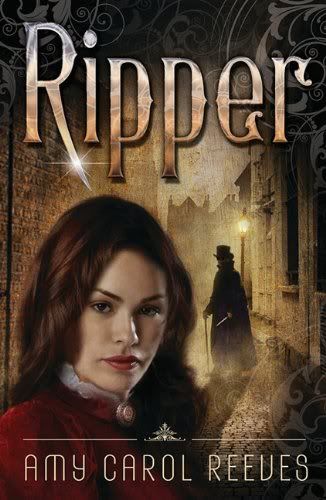
Ripper Book Review


Author: Amy Carol Reeves. Release date: 2012. Publisher:  Flux. ISBN: 9780738730721.

PhotobucketAnnotation: After her mother’s death, seventeen-year-old Arabella “Abbie” Sharp leaves her home in Dublin to live with her wealthy grandmother, Lady Westfield, in the Kensington neighborhood of London. In an effort to get her granddaughter to appreciate her new life of privilege, Lady Westfield volunteers Abbie to work at the women’s hospital in Whitechapel. Abbie finds that she enjoys tending to the poverty stricken residents of the East End, but her new found love of medicine is cut short when Jack the Ripper begins terrorizing the dark streets surrounding the hospital.  

Personal thoughts: As I have said before, I am always ready to pounce on any novels that feature the brutal if intriguing Jack the Ripper case, so when I heard about Ripper I had to pick it up. I am also a fan of historical fiction, so I was able to enjoy Amy Carol Reeves’ story from both angles. Her knowledge and love of the time period is clear, and I definitely found some subtle and not-so-subtle references to classic novels that, hopefully, teen readers can pick up on as well. Although I found the supernatural components as well as the requisite love-triangle to somewhat detract from what I was really interested in, I think most teen readers will enjoy these aspects of the story, especially since so many young adult novels include them. I would easily recommend this book to a reader who wants historical fiction with a twist. I look forward to reading Renegade when it is released in 2013.

Plot summary: After her mother’s sudden death from dysentery, seventeen-year-old Arabella “Abbie” Sharp leaves the gritty streets of 1888 Dublin to live with her wealthy grandmother, Lady Westfield, in the well-to-do London neighborhood of Kensington. Before she was born, Lady Westfield disowned Abbie’s mother for eloping with a poor Frenchman, but now that Abbie has returned to her mother’s former privileged life, her grandmother is determined to ensure that Abbie doesn’t follow in her mother’s footsteps. In an effort to make her granddaughter appreciate her luxurious if dull new surroundings, Lady Westfield volunteers Abbie to work with family friend Dr. Bartlett at the women’s hospital in the impoverished Whitechapel neighborhood. Soon after beginning her work there, Abbie discovers a natural love of medicine and a genuine enjoyment of helping the poverty-stricken women of the East End. Her love of working in the hospital is brief, however, when Jack the Ripper begins his brutal killing spree, murdering women who were recently discharged from the hospital’s care. Like everyone, Abbie is terrified by the savage nature of the crimes, but she soon realizes that she and the Ripper have a connection: strange visions that show the Ripper’s victims just before their deaths. What is the link between Abbie, the Ripper and the Whitechapel Hospital, and can she discover it in time to save her own life?

Review: In her debut novel, author and 19th century British literature expert Amy Carol Reeves brings one of history’s most terrifying figures to life in Ripper. Although not the first young adult novel in recent years to feature Jack the Ripper, Abbie Sharp’s story is one of many layers in which the infamous murderer is just another component of a larger mystery. Abbie herself is a very likable character, trying to reconcile her new life of corsets and tea parties with the knife throwing skills and street smarts she picked up in Dublin. Her devotion and compassion for the patients she finds herself caring for at the Whitechapel Hospital is very believable, and will hopefully prompt readers to research more into what life was like for women living in poverty in the 19th century. Ripper fans will find some familiar faces, as Abbie meets and befriends several victims before they are brutally slain. The paranormal aspects of the story, from Abbie’s psychic visions to the increasingly obvious supernatural nature of the crimes, will also appeal to readers who want something more than just a simple historical fiction novel. As with all young adult novels, it seems, there is also a romance in the form of a love triangle between Abbie and two young physicians at the hospital. Since Ripper is the first book in a series, the love triangle will undoubtedly continue in the second installment, Renegade, which is set to be released in April 2013. Overall, Ripper proves to be an entertaining historical fiction novel that both Jack the Ripper fans and those not well acquainted with the killer can enjoy.

Genre:  Historical Fiction/Mystery

Reading level: Grade 8+

Similar titles: The Name of the Star by Maureen Johnson, The Book of Blood and Shadow by Robin Wasserman, Darker Still by Leanna Renee Hieber, Haunting Violet by Alyxandra Harvey, Wrapped by Jennifer Bradbury.

Themes:  Jack the Ripper, murder, mystery, conspiracy, secret societies, orphans, London, Victorian era.     

Awards/Reviews:  Positive review from VOYA, Publishers Weekly, and School Library Journal.

Series Information: First novel in Ripper series, second novel, Renegade, set to be released April 2013.       

Discussion questions:
-        Were you familiar with Jack the Ripper before reading the novel? What did you learn about him?

-        Why do you think Abbie has such a hard time adjusting to life in Kensington?

-         Would you want to work at the Whitechapel Hospital? Why or why not?

-       How would you explain Abbie’s visions?

-      Who was your favorite character in the novel? Why?

-       What would you like to see happen in the sequel, Renegade?


Tuesday, January 24, 2012

Haunting Violet Book Review

Author: Alyxandra Harvey. Release date: 2011. Publisher:  Walker Childrens. ISBN: 9780802798398.
Annotation: Sixteen-year-old Violet Willoughby has spent her life assisting her mother, a fraudulent spiritual medium, in tricking wealthy widowers and grieving mothers out of their gold and silver. After arriving in the lavish country manner of Rosefield, home to the powerful Lord Jasper, Violet begins to see the ghosts of the recently departed, including that of Rowena, a girl her age who mysteriously drown a year earlier.
Personal thoughts: I’ve never read one of Alyxandra Harvey’s books before, but after finishing Haunting Violet, I think I can safely call myself a fan! Harvey lists Jane Eyre and Pride and Prejudice as amongst her favorite novels, and their influence is clearly felt in Haunting Violet. I am also very fond of the Regency and Victorian eras, and really enjoyed how well she portrayed life in Victorian England. The characters, setting and plot were all well-developed in Haunting Violet, and the story was expertly paced. I look forward to picking up Harvey’s next novel, and highly recommend this one to fellow Austen/Bronte enthusiasts!
Plot summary: Sixteen-year-old Violet Willoughby has spent her life assisting her mother, Celeste, a fraudulent spiritual medium, in tricking wealthy widowers and grieving mothers out of their gold and silver. Life in Victorian England for a former housemaid left expecting a child after an affair with her wealthy employer was not easy for Mary Morgan. After Violet’s birth, Mary adopted the pseudonym Celeste Willoughby, posing as a grieving widow with the ability to speak with the dead. Now “Mrs. Willoughby” and Violet live a life of fraud: pickpocketing, scamming and conning the wealthy into paying them for any solace after the death of a loved one. Violet hates tricking people. Her only consolation is in the comfort of her friend Colin: her mother’s longtime assistant who has grown up alongside Violet and helps Mrs. Willoughby perform her “séances”. One summer, the family is invited to Rosefield, a lavish country estate owned by the very wealthy and powerful Lord Jasper. If they can pull it off, the grand séance they will perform at Rosefield will ensure their place in society, as many members of Lord Jasper’s esteemed acquaintance have been invited especially for the event. Upon arriving at the scene of their next scam, however, Violet makes a startling discovery: she has begun to see the spirits of the deceased, not in the fraudulent way her mother claims to, but for real. Unsure of what to do with her newfound power, Violet is faced with the stubborn and troubled ghost of Rowena Wentworth, a fifteen-year-old girl and former neighbor of Lord Jasper’s who mysteriously drowned the previous year. Rowena seems intent on Violet discovering the truth about her death, but as Violet learns more and more about the secrets floating through the halls of Rosefield, she also discovers that her own life may be in danger.
Review:  This charming novel from veteran author, Alyxandra Harvey, is certain to delight both fans of historical fiction, particularly the Victorian era, and ghost stories alike. The main plot of the story is simple: Violet must help the ghost of the murdered Rowena to reveal who killed her, resulting in an always popular whodunit mystery. Below the surface, however, there is quite a bit more to Haunting Violet than just figuring out who the bad guy is. The relationship between Violet and her con-artist mother plays an important role in the story. Life for women of low social status in Victorian society was grim at best, and the reader can almost sympathize with the devious ways of Mrs. Willoughby, a former housemaid, who wants a better place in the world. The abuse enacted upon Violet by her mother is one of the more thought-provoking aspects of the book, particularly since one can imagine that similar circumstances between parents who live dishonest lives and their children occur on a daily basis in today’s society as well. In actuality, the novel provides just as much of a social commentary on the Victorian era as it does a ghost story, making it an interesting read for teens who are not as familiar with this period in time. Overall, Haunting Violet is an entertaining and well-paced ghost-story that readers of all ages can easily enjoy.
Genre: Mystery/Historical Fiction
Reading level: Grade 7+
Similar titles: The Poisoned House by Michael Ford, Wrapped by Jennifer Bradbury, Darker Still by Leanna Renee Hieber.   
Themes:  Psychic abilities, spiritualism, ghosts, fraud/dishonesty, Victorian era, class warfare, mother/daughter relationships.
Awards/Reviews:  Positive reviews from Publishers Weekly and Kirkus.  
Series Information: N/A
Discussion questions: 

-  Why do you think Violet disliked tricking her mother’s clients so much?

-  Do you think that, in helping her mother to perform “séances,” Violet was just as guilty as Mrs. Willoughby in tricking people? Why or why not?

- Why do you think Violet wanted to keep her psychic abilities secret from her mother?

- Were you surprised by the ending of the novel? Why or why not?
<

Saturday, January 21, 2012

Dearly, Departed Book Review

 Author: Lia Habel. Release date: 2011. Publisher:  Del Rey. ISBN: 9780345523318.
Annotation: In 2195, orphan Nora Dearly lives with her strict aunt in New Victoria where the only aspiration she’s allowed is to marry a rich gentleman who can replace the money her aunt has squandered since her father’s death. When a zombies come knocking on Nora’s door, however, she abandons her fancy frocks for a gun and moves to Z Base, where intelligent zombie soldiers are training to save the world from a zombie apocalypse.    
Personal thoughts:  I was really excited to read this novel when I first heard about it. I was familiar with the steampunk concept, but had never read a novel that incorporated the idea before. I also love zombies, so I was ready to really enjoy Dearly, Departed. Unfortunately, things didn’t go quite so well as I’d hoped. I really liked Lia Habel’s descriptions of New London and the conflict between the New Victorians and the Punks. As the novel progressed, however, I got more and more confused. The changing narration was really difficult for me to get used to, even though I’ve read many novels with rotating narrators, and I felt like the whole New Victorian concept got sloughed off when the zombies entered the story. I think the author had some really great ideas, but fell victim to something I can completely understand, trying to do too much. Even though I wasn’t a huge fan of this novel, I will still pick up the sequel when it’s released later this year. I really think the potential is there, and I hope that the second installment in the series will be what I was looking for in the first.
Plot summary: The year is 2195 and, following the apocalyptic downfall of society in the early 2000’s, America’s population has migrated to the equatorial countries and set up New Victoria: a nation modeled after the sensibilities of the Victorian age but with high-tech innovations like cell phones and electric carriages. Sixteen-year-old Nora Dearly lives with her strict aunt in the years following her parents’ deaths. Nora has a high social standing, since her father was a brilliant scientist, and attends a fancy school with her best friend, Pamela, whose place in society is not so high. The girls feel pressured to make good marriages, especially Nora after she learns that her aunt has squandered her father’s fortune. Everything changes one evening, however, when Nora is viciously attacked by a pack of zombies, only to find herself rescued by another pack and whisked away to a mysterious army outpost known as Z Base. Confused and scared, Nora learns that a zombie plague has slowly been creeping its way up to New Victoria and is being kept at bay by an army of intelligent undead soldiers. It seems that the virus, known as the Lazarus, only makes some of the infected insane and hungry for flesh upon reanimation, others retain their memories and personalities. One of these soldiers, Bram Griswold, is brave and handsome, and explains to Nora about her and her father’s role in protecting the world from a zombie apocalypse. Will Nora be able to keep her wits about her as she struggles to find out the truth behind the Lazarus all while falling more and more for Bram?
Review:  Readers unfamiliar with the term “steampunk” will become more than familiar with the concept of high-tech blended with antiquity in Lia Habel’s debut novel, Dearly, Departed. The author describes herself as a fan of both zombies and the Victorian-era, and that is exactly the plot she has created in her new Gone with the Respiration series. The setting of the novel is, arguably, one of if not the most interesting aspects of the story. The first chapters of the book describe exactly how the world of New Victoria came to be, and establishing the “civil war” that permeates the story between the New Victorians and the Punks, a separate nation that does not agree with the strict rules and oppression in New Victoria. As the novel progresses, however, things begin to get a little muddled. The narration changes from chapter to chapter, rotating between five characters, and this often gets more than a little confusing. The zombie aspect of the story takes over fairly early on as well, leaving the reader wondering what happened to the Lia Habel’s delightful steampunk environment. It almost seems like the author tried to include too many ideas in the novel, creating something that becomes too complicated and unsure of itself. While there are certainly things to be enjoyed in Dearly, Departed, the story will, unfortunately, be likely to confuse many readers. Hopefully the second novel, Dearly, Beloved, can correct some of these problems upon its release in September of 2012.  
Genre: Science-Fiction/Steampunk
Reading level: Grade 8+
Similar titles: Pride and Prejudice and Zombies by Jane Austen and Seth Grahame-Smith, Megan Berry series by Stacey Jay, Forest of Hands and Teeth series by Carrie Ryan, I Kissed a Zombie, and I liked It by Adam Selzer. The Strange Case of Finley Jayne (Steampunk Chronicles) by Kady Cross.  
Themes:  Steampunk, Victorian era, zombies, post-apocalyptic, dystopian, war, class warfare.
Awards/Reviews:  Positive reviews on amazon.com.  
Series Information: First installment in Gone With the Respiration series. Second book, Dearly, Beloved set to be released in September 2012.
Discussion questions: 
-   Were you familiar with the steampunk concept before reading this novel? Explain what it means to you.
-   If you were alive in Nora’s world, would you want to be a New Victorian or a Punk? Why?
-    Why do you think the Lazarus made some zombies insane and some not? 
-    Who was your favorite character in the novel? Why?
-    What would you like to see happen in the sequel?  

Monday, December 5, 2011

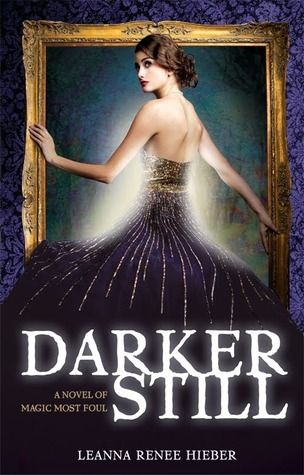
Darker Still: A Novel of Magic Most Foul Book Review

 Author: Leanna Renee Hieber. Release date: 2011. Publisher:  Sourcebooks Fire. ISBN: 9781402260520.
Annotation:  Seventeen-year-old Natalie Stewart’s father works at the Metropolitan Museum of Art in 1880s New York City. When a strange new painting is brought to the museum, one that is rumored to be haunted, Natalie is captivated by the handsome, young Lord Denbury depicted on the canvas. Soon Natalie discovers that the rumors of the piece being alive are true, and that the painting is actually a prison, one that is holding Lord Denbury hostage.
Personal thoughts:  This novel was so full of things I loved that it almost seemed that Leanna Renee Hieber wrote it just for me! History, mythology, curses, romance, and the intriguing idea of someone being trapped in a painting…how could I not enjoy Darker Still? I was especially impressed with Hieber creating a leading lady with a very real disability. Natalie’s being mute played a role in the plot, but I also liked how Hieber took care to point out throughout the novel that she was a normal teenage girl despite the fact that she had to communicate via sign language. Overall, I really loved this novel and would highly recommend it to both teen and adult readers. I’m looking forward to the next installment in the series!  
Plot summary: At a young age, Natalie Stewart witnessed the death of her mother in a tragic accident and found herself unable to speak from then on. Now seventeen-years-old, Natalie’s existence is one of longing; yearning to live a normal life, have friends, and fall in love. The year is 1880, and Natalie’s father works for the Metropolitan Museum of Art in New York City. One day, Natalie and her father meet Mrs. Evelyn Northe, a wealthy and kind woman with an interest in spiritualism. Mrs. Northe, like Natalie, is fluent in sign language and the two become fast friends. Mrs. Northe informs Natalie and her father that a painting with a curious history has come into her possession. It seems that late Lord Denbury, the attractive, young man depicted on the canvas, is rumored to haunt the piece. Upon seeing the painting, Natalie is immediately captivated by Lord Denbury’s magnetic blue eyes and handsome features. Soon, however, Natalie realizes that there is more to her infatuation than just a love for brushstroke on canvas. Small changes in the painting catch her eye, and it seems that Lord Denbury is calling to her, begging her to reach out and touch the canvas. When she does, Natalie falls into a strange world, one inside the painting that has become a prison for the handsome Lord. It seems that an evil spell has trapped Lord Denbury’s soul, while his body acts as a vessel for a sinister spirit in the outside world. Will Natalie find a way to reverse the curse and save the man she finds herself falling for?
Review:  Author Leanna Renee Hieber describes herself as a “gateway drug” for young readers into the literature of the 19th century, and her latest novel, Darker Still, proves to be an intoxicating plunge into Victorian New York City. Almost from the first page, the reader is immediately as enraptured in the story as the heroine, the mute Natalie Stewart, is with the mysterious depiction of Lord Denbury. The novel is full of many things: romance, mysticism, mythology, religion, mystery, and horror. The intricate world of the painting and exactly how Natalie and Lord Denbury fit into it keep the reader guessing as the plot unfolds. The result is a thoroughly enjoyable story that pays homage to such classics as Oscar Wilde’s The Picture of Dorian Gray and Sir Arthur Conan Doyle’s Sherlock Holmes. The author’s passion for the Victorian era is evident in her detailed and loving portrayal of gas lamp light streets, gowns, carriages, and corsets. The first in a new series, Darker Still makes for an excellent start to something original and entertaining for teen and adult readers who are fans of gothic novels, mystery and romance.
Genre: Historical Fiction/Mystery
Reading level: Grade 8+
Similar titles: Entwined by Heather Dixon, Dearly, Departed by Lia Habel, The Poisoned House by Michael Ford, Wrapped by Jennifer Bradbury.
Themes:  Curses, art, Victorian era, New York City, mythology, spiritualism, grief, demons.
Awards/Reviews:  Positive review from Kirkus and Booklist.
Series Information: First installment in Magic Most Foul series.
Discussion questions: 
- Why do you think Natalie was unable to speak after her mother’s death?
- Do you think it is common for people to assume that those who cannot hear or speak are “dumb” as Maggie’s friends assumed about Natalie?
- Can you name all of the cultures/mythologies that were described as being involved in Lord Denbury’s curse?
- What do you think “the Whisper” was?
- What would you like to see happen next in Natalie and Lord Denbury’s story?