Author: Alyxandra Harvey. Release date: 2011. Publisher: Walker Childrens. ISBN: 9780802798398.
 Annotation: Sixteen-year-old Violet Willoughby has spent her life assisting her mother, a fraudulent spiritual medium, in tricking wealthy widowers and grieving mothers out of their gold and silver. After arriving in the lavish country manner of Rosefield, home to the powerful Lord Jasper, Violet begins to see the ghosts of the recently departed, including that of Rowena, a girl her age who mysteriously drown a year earlier.
Personal thoughts: I’ve never read one of Alyxandra Harvey’s books before, but after finishing Haunting Violet, I think I can safely call myself a fan! Harvey lists Jane Eyre and Pride and Prejudice as amongst her favorite novels, and their influence is clearly felt in Haunting Violet. I am also very fond of the Regency and Victorian eras, and really enjoyed how well she portrayed life in Victorian England. The characters, setting and plot were all well-developed in Haunting Violet, and the story was expertly paced. I look forward to picking up Harvey’s next novel, and highly recommend this one to fellow Austen/Bronte enthusiasts!
Plot summary: Sixteen-year-old Violet Willoughby has spent her life assisting her mother, Celeste, a fraudulent spiritual medium, in tricking wealthy widowers and grieving mothers out of their gold and silver. Life in Victorian England for a former housemaid left expecting a child after an affair with her wealthy employer was not easy for Mary Morgan. After Violet’s birth, Mary adopted the pseudonym Celeste Willoughby, posing as a grieving widow with the ability to speak with the dead. Now “Mrs. Willoughby” and Violet live a life of fraud: pickpocketing, scamming and conning the wealthy into paying them for any solace after the death of a loved one. Violet hates tricking people. Her only consolation is in the comfort of her friend Colin: her mother’s longtime assistant who has grown up alongside Violet and helps Mrs. Willoughby perform her “séances”. One summer, the family is invited to Rosefield, a lavish country estate owned by the very wealthy and powerful Lord Jasper. If they can pull it off, the grand séance they will perform at Rosefield will ensure their place in society, as many members of Lord Jasper’s esteemed acquaintance have been invited especially for the event. Upon arriving at the scene of their next scam, however, Violet makes a startling discovery: she has begun to see the spirits of the deceased, not in the fraudulent way her mother claims to, but for real. Unsure of what to do with her newfound power, Violet is faced with the stubborn and troubled ghost of Rowena Wentworth, a fifteen-year-old girl and former neighbor of Lord Jasper’s who mysteriously drowned the previous year. Rowena seems intent on Violet discovering the truth about her death, but as Violet learns more and more about the secrets floating through the halls of Rosefield, she also discovers that her own life may be in danger.
Review: This charming novel from veteran author, Alyxandra Harvey, is certain to delight both fans of historical fiction, particularly the Victorian era, and ghost stories alike. The main plot of the story is simple: Violet must help the ghost of the murdered Rowena to reveal who killed her, resulting in an always popular whodunit mystery. Below the surface, however, there is quite a bit more to Haunting Violet than just figuring out who the bad guy is. The relationship between Violet and her con-artist mother plays an important role in the story. Life for women of low social status in Victorian society was grim at best, and the reader can almost sympathize with the devious ways of Mrs. Willoughby, a former housemaid, who wants a better place in the world. The abuse enacted upon Violet by her mother is one of the more thought-provoking aspects of the book, particularly since one can imagine that similar circumstances between parents who live dishonest lives and their children occur on a daily basis in today’s society as well. In actuality, the novel provides just as much of a social commentary on the Victorian era as it does a ghost story, making it an interesting read for teens who are not as familiar with this period in time. Overall, Haunting Violet is an entertaining and well-paced ghost-story that readers of all ages can easily enjoy.
Genre: Mystery/Historical Fiction
Reading level: Grade 7+
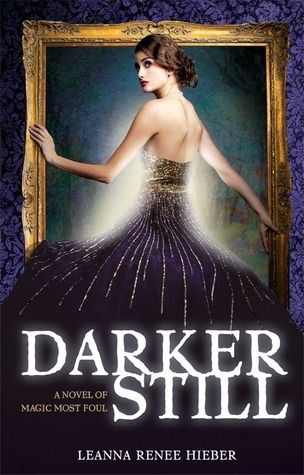
Similar titles: The Poisoned House by Michael Ford, Wrapped by Jennifer Bradbury, Darker Still by Leanna Renee Hieber.
Themes: Psychic abilities, spiritualism, ghosts, fraud/dishonesty, Victorian era, class warfare, mother/daughter relationships.
Awards/Reviews: Positive reviews from Publishers Weekly and Kirkus.
Series Information: N/A
Discussion questions:
- Why do you think Violet disliked tricking her mother’s clients so much?
- Do you think that, in helping her mother to perform “séances,” Violet was just as guilty as Mrs. Willoughby in tricking people? Why or why not?
- Why do you think Violet wanted to keep her psychic abilities secret from her mother?
- Were you surprised by the ending of the novel? Why or why not?
< - Why do you think Violet disliked tricking her mother’s clients so much?
- Do you think that, in helping her mother to perform “séances,” Violet was just as guilty as Mrs. Willoughby in tricking people? Why or why not?
- Why do you think Violet wanted to keep her psychic abilities secret from her mother?
- Were you surprised by the ending of the novel? Why or why not?